Solar Panel Lifespan Explained and Factors That Matter
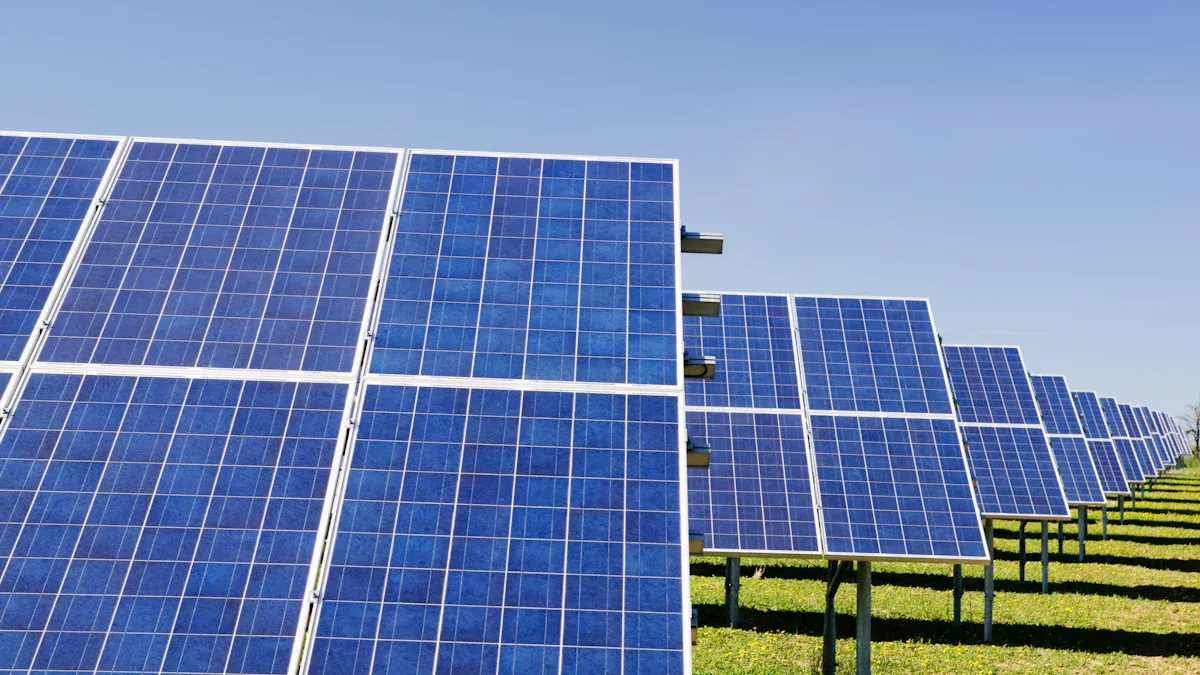
When I first looked into solar panels, I learned they usually last over 25 years. Most keep working well, only losing a little power each year. I found that good installation, quality materials, and regular cleaning help them last longer—even up to 30 or 40 years in some cases.
Key Takeaways
- Solar panels usually last 25 to 30 years and keep working beyond that, but their power drops slowly each year.
- Choosing high-quality panels, getting professional installation, and doing regular cleaning and maintenance help solar panels last longer and work better.
- Environmental factors like heat, weather, and dirt affect panel performance, so regular checks and timely cleaning protect your investment.
Solar Panels: Lifespan and Degradation
How Long Do Solar Panels Last?
When I started researching solar panels, I wanted to know how long they would actually last on my roof. Most sources say that solar panels have a useful life of about 25 to 30 years. That means after 25 years, they usually still work, but their efficiency drops to around 80% of what it was when they were new. Some panels, especially the high-quality ones, can keep producing electricity for 40 years or more, just at a lower output.
I found that manufacturers back up these claims with warranties. Many companies guarantee that their panels will still produce at least 80% of their original power after 25 years. Some premium brands even promise over 90%. Here’s a quick look at some manufacturer warranties:
| Manufacturer | 25-Year Power Warranty (%) |
|---|---|
| Amerisolar | 80.6 |
| Auxin Solar | 80.7 |
| Boviet Solar | 80 |
| Canadian Solar | 83.1 |
| CertainTeed Solar | 80 |
| First Solar | 80 |
| Global Solar | 80 |
| LG | 90.8 |
| Panasonic | 90.76 |
| Q Cells | 83 |
| REC Solar | 86 |
| Recom Solar | 83.6 |
| SunPower | 92 |
| Trina Solar | 80.68 |
| Winaico | 80.2 |
Note: Most solar panels don’t just stop working after 25 or 30 years. They keep producing electricity, but you might notice a drop in output.
What Is Solar Panel Degradation?
I learned that solar panel degradation is a slow process where the panels lose a bit of their ability to turn sunlight into electricity each year. This happens because of aging, exposure to sunlight, weather, and other environmental factors. On average, solar panels lose about 0.5% of their efficiency every year. In some tough climates, the rate can be higher, but high-quality panels can have even lower rates.
Here are some reasons why panels degrade:
- Aging: Over time, materials inside the panel break down.
- Light-Induced Degradation (LID): The first few hours or days in the sun can cause a small, quick drop in efficiency.
- Potential-Induced Degradation (PID): Electrical stress can cause power loss.
- Environmental stress: Things like heat, humidity, and salt (near the ocean) can speed up the process.
Some studies show that in harsh places like deserts, panels can lose up to 3-4% of their efficiency per year. But in most homes, the loss is much slower.
How Performance Changes Over Time
When I looked at how solar panels perform as they age, I noticed that the biggest drop in efficiency usually happens in the first few years. After that, the decline slows down. For example, a study in Oman found that after seven years, a solar system lost about 6.3% of its efficiency. That’s less than 1% per year.
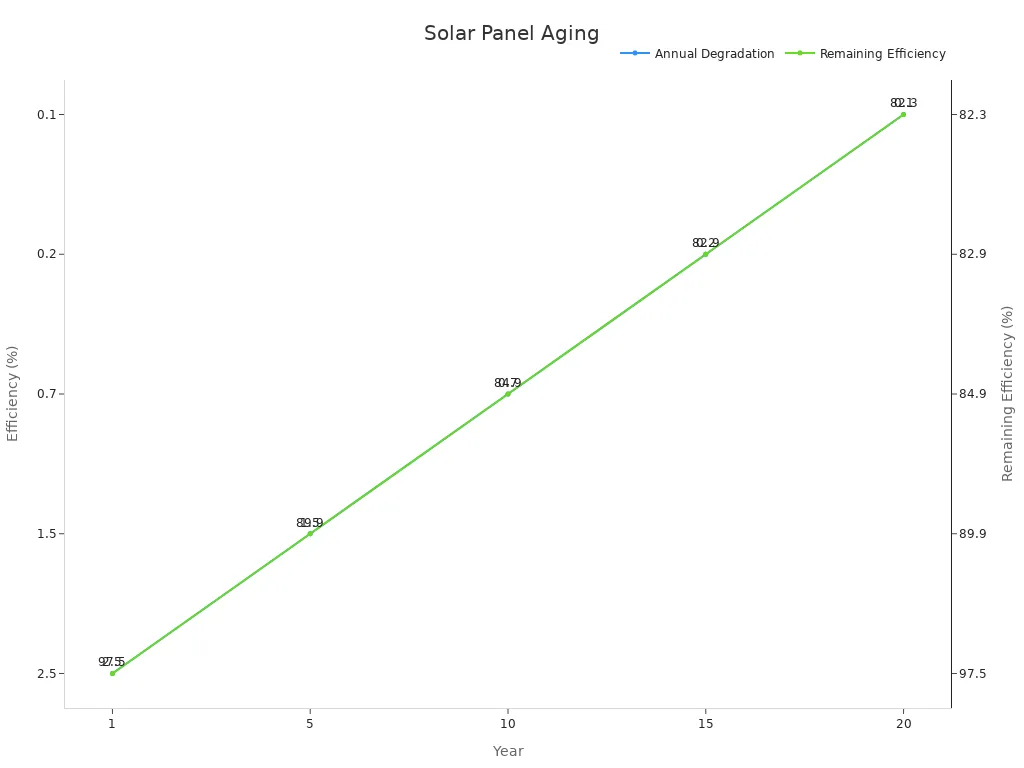
Here’s a table that shows how efficiency can change over 20 years:
| Year | Annual Efficiency Degradation (%) | Remaining Efficiency (%) |
|---|---|---|
| 1 | 2.5 | 97.5 |
| 5 | 1.5 | 89.9 |
| 10 | 0.7 | 84.9 |
| 15 | 0.2 | 82.9 |
| 20 | 0.1 | 82.3 |
You can see that the rate of loss gets smaller over time. After 20 years, most panels still have over 80% of their original efficiency.
I also learned that daily changes in sunlight, temperature, and wind can cause small ups and downs in how much power the panels make. For example, panels might work best in the morning and late afternoon, but get a little less efficient at midday if they get too hot. Wind can help cool them down and boost performance.
Tip: If you want your solar panels to last as long as possible, choose high-quality panels and make sure they’re installed by professionals. Regular cleaning and maintenance can also help slow down degradation.
Factors That Affect Solar Panels’ Lifespan
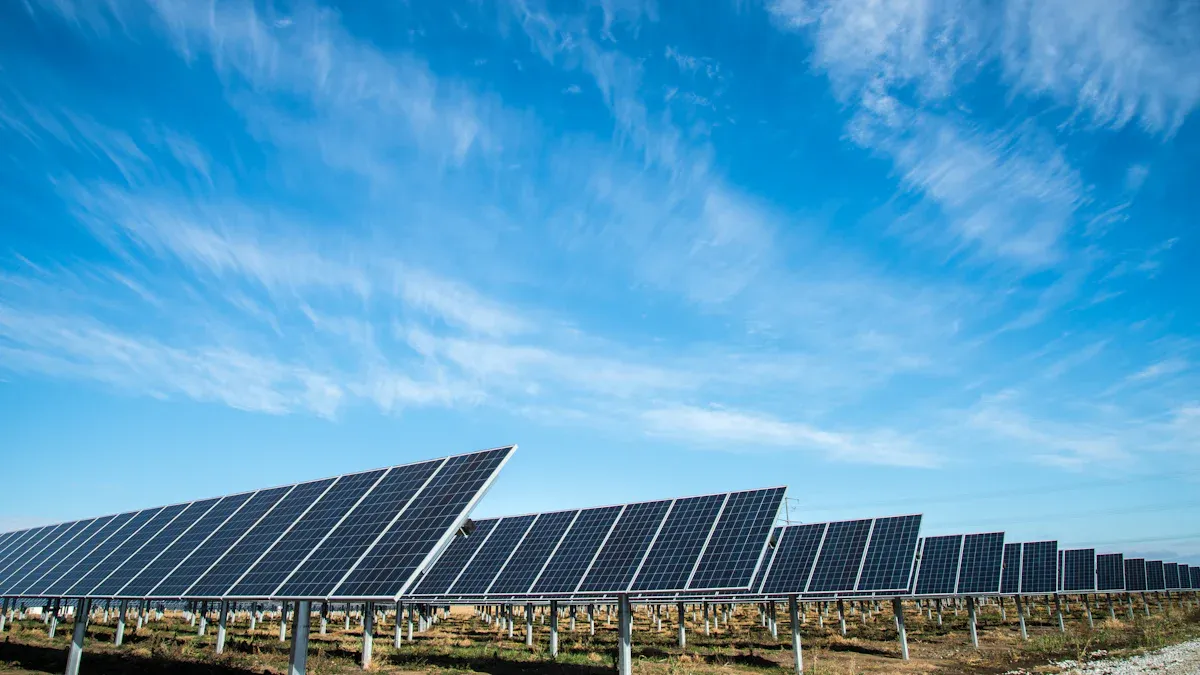
Panel Quality and Technology
When I started learning about solar panels, I realized that not all panels are created equal. The quality and technology behind each panel make a huge difference in how long they last. Here’s what I found out:
- Top-tier manufacturers control every step of the production process. They use advanced machines and invest in research, which means their panels usually last longer.
- The materials matter. Monocrystalline silicon cells, for example, are known for their durability and efficiency.
- Newer encapsulation materials, like POE, resist moisture better than older types like EVA. This helps panels last longer, especially in humid places.
- Strong tempered glass and special coatings protect the panels from weather and UV rays.
- Studies show that modern monocrystalline panels lose only about 0.4-0.5% efficiency per year. That’s better than older panels and matches what most warranties promise.
Manufacturer warranties often guarantee at least 80% efficiency after 25 years. That shows real confidence in the technology.
Installation and Workmanship
I quickly learned that even the best solar panels won’t last if they’re not installed right. The way panels are mounted, wired, and secured makes a big difference. Here’s what matters most:
- Certified installers follow strict guidelines and use the right tools to make sure every panel is secure.
- Quality checks during manufacturing, delivery, and installation help catch problems early.
- Proper site assessments look at things like roof condition and shading, so the system works well from day one.
- Good installers keep records of their work, which helps with warranty claims later.
If the installation team rushes or skips steps, panels can get damaged or work less efficiently. I always recommend choosing experienced professionals with good reviews.
Maintenance and Cleaning
Keeping solar panels clean and well-maintained is key to making them last. I found out that dirt, dust, and bird droppings can block sunlight and cut energy output by up to 20%. Regular cleaning makes a big difference.
| Location | Cleaning Approach | Performance Improvement | Cost Impact |
|---|---|---|---|
| Karnataka Solar Farm | Data-driven cleaning schedules | 1.5% increase | Reduced water and labor costs |
| Parasol Solar Plant, Maharashtra | Automated cleaning robots + data analytics | 15% increase | Not specified |
| Suncrest Solar Park, Rajasthan | Data-driven cleaning robots responding to dust storms | 12% increase | 30% reduction in maintenance costs |
| Phoenix Sun Facility, Gujarat | Automated, data-centric cleaning approach | 18% increase | Not specified |
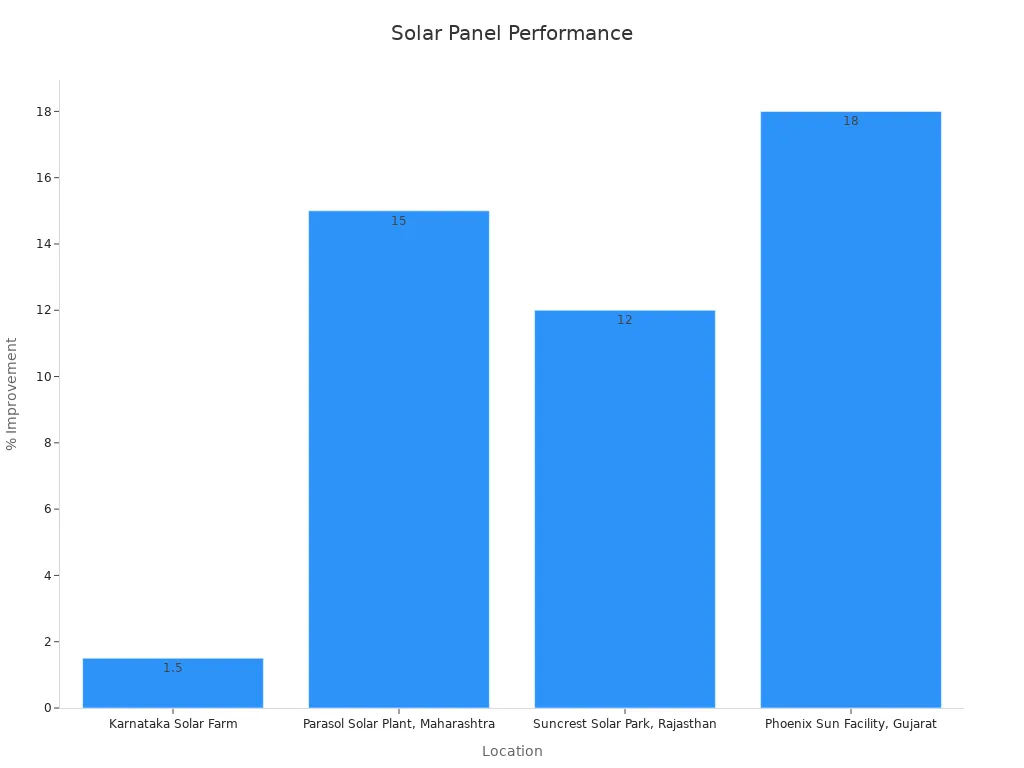
I also use real-time monitoring to spot problems early. This way, I can fix small issues before they become big ones. Keeping up with maintenance not only boosts performance but also helps panels last longer.
Environmental Conditions
Where you live has a big impact on how long your solar panels last. I’ve seen that panels in mild climates tend to last longer than those in harsh environments. Here’s what can affect them:
- Extreme heat can speed up wear and tear.
- Hail, snow, and sandstorms can cause physical damage.
- High humidity can lead to moisture problems inside the panels.
- Strong winds test how well the panels are mounted.
Researchers have measured how temperature swings and weather events affect panel performance over time. They use special tests to track how much efficiency drops in different conditions. I always check local weather patterns before installing a system.
Regular inspections help catch weather-related damage early, so you can fix it before it gets worse.
Tips to Extend Solar Panels’ Life
I want my solar panels to last as long as possible, so I follow a few simple tips:
- Schedule regular cleaning and inspections.
- Use real-time monitoring to catch issues early.
- Hire certified professionals for installation and repairs.
- Keep trees and bushes trimmed to avoid shading and debris.
- Choose panels with strong warranties and proven durability.
A recent review of hundreds of studies showed that proactive, data-driven maintenance works best. Using smart technology to predict when cleaning or repairs are needed can save money and keep panels working longer.
When to Replace Solar Panels and Warranty Considerations
I often wonder when it’s time to replace solar panels. Most panels follow a pattern: a few might fail early, but most last for decades before wearing out. Here’s what I look for:
- If energy output drops below 80% of the original level, it might be time to replace the panels.
- Visible damage, like cracks or yellowing, is a sign to check for replacement.
- Warranties usually last 25–30 years and cover both performance and defects.
- Some companies now offer 30-year warranties based on real-world data and continuous monitoring.
I always keep records of maintenance and performance. This helps with warranty claims and makes it easier to decide when to upgrade.
Solar panels can last well beyond their warranty period if you take care of them. Knowing when to replace them and understanding your warranty gives you peace of mind and protects your investment.
I’ve seen that solar panels can deliver reliable energy for decades when I choose high-quality equipment, get expert installation, and keep up with maintenance. Research shows that regular care slows annual power loss to just 0.5%. Here’s a quick look at what matters most:
| Factor | Effect on Lifespan |
|---|---|
| Quality panels | Lower annual degradation |
| Professional install | Fewer early failures |
| Regular maintenance | Sustained energy output |
Staying on top of cleaning and inspections helps me protect my investment and know when it’s time for an upgrade.
FAQ
How often should I clean my solar panels?
I check my panels every few months. If I see dust or bird droppings, I clean them with water and a soft brush.
Tip: Clean panels work better and last longer!
Can bad weather damage my solar panels?
I have seen panels handle rain, snow, and wind. Strong hail or falling branches can cause damage, so I inspect them after storms.
Do solar panels work on cloudy days?
Yes, my panels still make electricity when it’s cloudy. They just produce less power than on sunny days.